Ingredient Q&A - Last reviewed July 1, 2026
Are Oats Gluten Free?
Oats are naturally gluten-free, but they often need a gluten-free label or certification because growing, transport, and milling can introduce cross-contact.
Needs manufacturer confirmation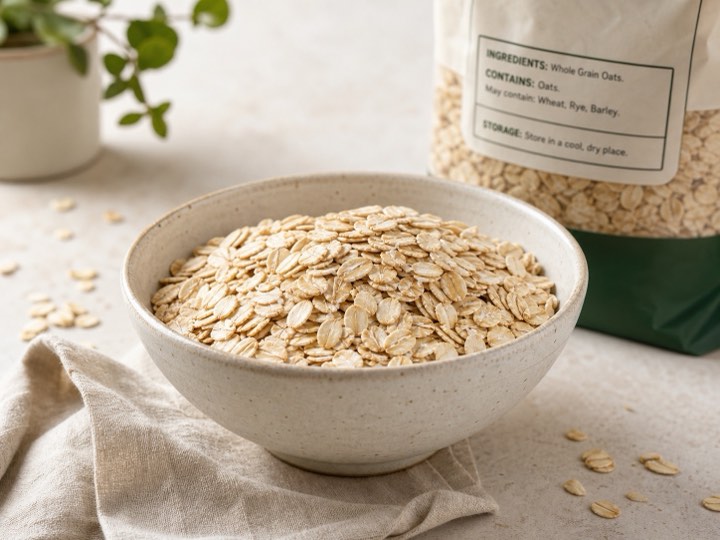
Direct answer
Plain oats do not inherently contain wheat, barley, or rye gluten, but oats are a high-compliance ingredient because cross-contact is common. Choose oats labeled gluten-free, review certification when available, and remember that some people react to oat avenin even when gluten controls are in place.
Use this page as a label-reading guide, then paste the exact ingredient list into the checker if the package wording is unclear or the product has changed.
Key takeaways
Oats themselves are not wheat, barley, or rye.
Cross-contact is the main gluten risk for oats and oat flour.
Certified gluten-free oats give stronger process assurance than a generic oat listing.
Why oats are handled conservatively
Oats can be grown, transported, or processed near gluten-containing grains. That is why the checker treats oats as needing manufacturer confirmation unless the package gives stronger gluten-free context.
Gluten-free label vs certification
A gluten-free label is useful, but third-party certification can add process checks. Neither removes the need to verify the exact package and current manufacturer information.
Avenin sensitivity
Avenin is the oat protein some people may react to separately from gluten cross-contact. This site does not diagnose that response; it flags the issue so readers know when medical guidance may matter.
Why the label matters
Are Oats Gluten Free can only be screened from the current ingredient list, allergen statement, gluten-free claim, and manufacturer information. The page risk level is Needs manufacturer confirmation.
- Start with the ingredient list and allergen statement.
- Check gluten-free claims and certification marks separately.
- Use manufacturer confirmation when source or facility wording is vague.
What to look for on the label
- Look for a gluten-free label on oats, oat flour, granola, breakfast bars, and oat milk.
- Check whether the brand uses purity protocol or other gluten-control process language.
- If you have celiac disease and react to oats, ask a physician or registered dietitian about avenin sensitivity.
Recommendation notes
- Use product cards as label-check starting points, including Bob's Red Mill Gluten Free Oats and Kikkoman Gluten-Free Tamari; approved retailer URLs are required before final outbound monetization.
- Paste the exact ingredient list into the checker when the package includes vague starches, flavors, sauces, oats, shared-equipment wording, or a changed formula.
FAQ
Are oats naturally gluten-free?
Yes, oats are not wheat, barley, or rye. The main gluten concern is cross-contact during growing, transport, or processing.
Should people with celiac disease choose certified gluten-free oats?
A certified gluten-free oat product gives stronger process assurance. People with celiac disease should also follow their physician or dietitian guidance.
Why does the checker flag oats?
The checker flags oats because unlabeled oats often need manufacturer confirmation for cross-contact controls.