Ingredient Q&A - Last reviewed July 1, 2026
Is Soy Sauce Gluten Free?
Traditional soy sauce often contains wheat, so it should be treated as a gluten risk unless the current bottle is labeled gluten-free.
May contain gluten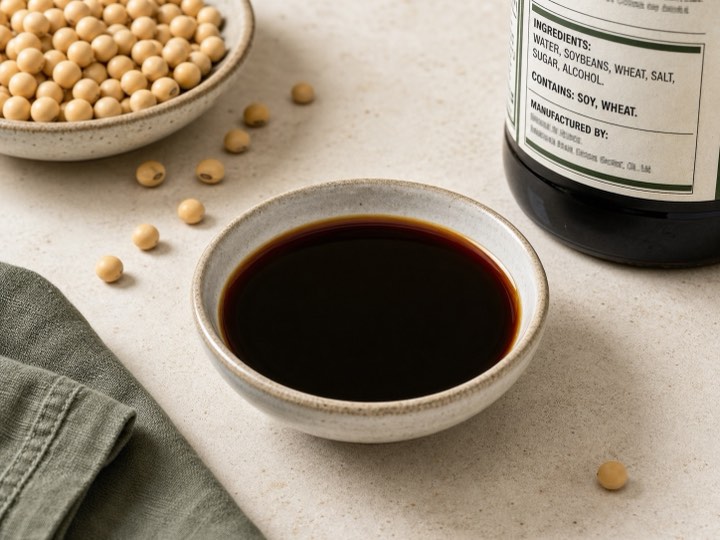
Direct answer
Traditional soy sauce often has gluten risk because wheat is commonly used in the brewing process. Choose soy sauce labeled gluten-free, wheat-free tamari, or coconut aminos, and check related sauces such as teriyaki, hoisin, and oyster sauce separately.
Use this page as a label-reading guide, then paste the exact ingredient list into the checker if the package wording is unclear or the product has changed.
Key takeaways
Do not assume soy sauce is gluten-free unless the bottle says so.
Tamari can be wheat-free, but it still needs a current label check.
Teriyaki, hoisin, and oyster sauce may contain soy sauce or wheat-based thickeners.
Why wheat appears in soy sauce
Many traditional soy sauces are brewed with soybeans and wheat. That is why the checker defaults soy sauce to May contain gluten unless the label gives stronger gluten-free context.
Tamari and coconut aminos
Tamari is often used as a gluten-free soy sauce alternative when it is made without wheat. Coconut aminos are soy-free and commonly used as a different flavor profile, but both still need label review.
Sauces that need the same check
Teriyaki, hoisin, oyster sauce, ponzu, and bottled marinades can contain soy sauce or wheat. Paste those labels into the checker instead of assuming the sauce category is fine.
Why the label matters
Is Soy Sauce Gluten Free can only be screened from the current ingredient list, allergen statement, gluten-free claim, and manufacturer information. The page risk level is May contain gluten.
- Start with the ingredient list and allergen statement.
- Check gluten-free claims and certification marks separately.
- Use manufacturer confirmation when source or facility wording is vague.
What to look for on the label
- Look for wheat in the ingredients and allergen statement.
- Confirm gluten-free or wheat-free wording on tamari and soy sauce alternatives.
- Check marinades, stir-fry sauces, and restaurant sauces that may include soy sauce.
Recommendation notes
- Use /alternatives/gluten-free-soy-sauce-alternative for tamari and coconut aminos comparisons.
- Use the checker on restaurant sauce ingredient lists when available.
FAQ
Is regular soy sauce gluten-free?
Usually no. Traditional soy sauce often includes wheat and should be treated as a gluten risk unless the label says gluten-free.
Is tamari gluten-free?
Some tamari is gluten-free or wheat-free, but not every bottle is. Check the exact product label.
What soy sauce alternatives should I compare?
Compare gluten-free soy sauce, wheat-free tamari, and coconut aminos based on ingredients, sodium, flavor, and allergen statements.